Two mailers can both wear a green leaf on the front and mean completely different things by it. One is made from recycled plastic and is meant to be recycled again; the other is made from plant-based polymers and is meant to be composted. They are not interchangeable, they fail in different ways, and putting the wrong end-of-life instruction on your packaging is one of the easier ways to lose a customer’s trust. This is a plain-language guide to what recycled and compostable poly mailers actually are, which certifications carry weight, and how to choose the one that fits how your customers really dispose of things.
Two different green claims that solve different problems
The first thing to separate is “recycled” from “compostable,” because they answer different questions. Recycled is about where the material came from: a recycled poly mailer is made partly or entirely from post-consumer plastic that would otherwise be waste, and it stays in the plastics stream, ideally getting recycled again. Compostable is about where the material goes: a compostable mailer is made from plant-based polymers designed to break down into compost under the right conditions, and it is meant to leave the plastics stream entirely. A recycled mailer is not compostable, and a compostable mailer generally should not go in plastic recycling, so the two claims point your customer toward opposite bins.
Recycled poly mailers: post-consumer content and store drop-off
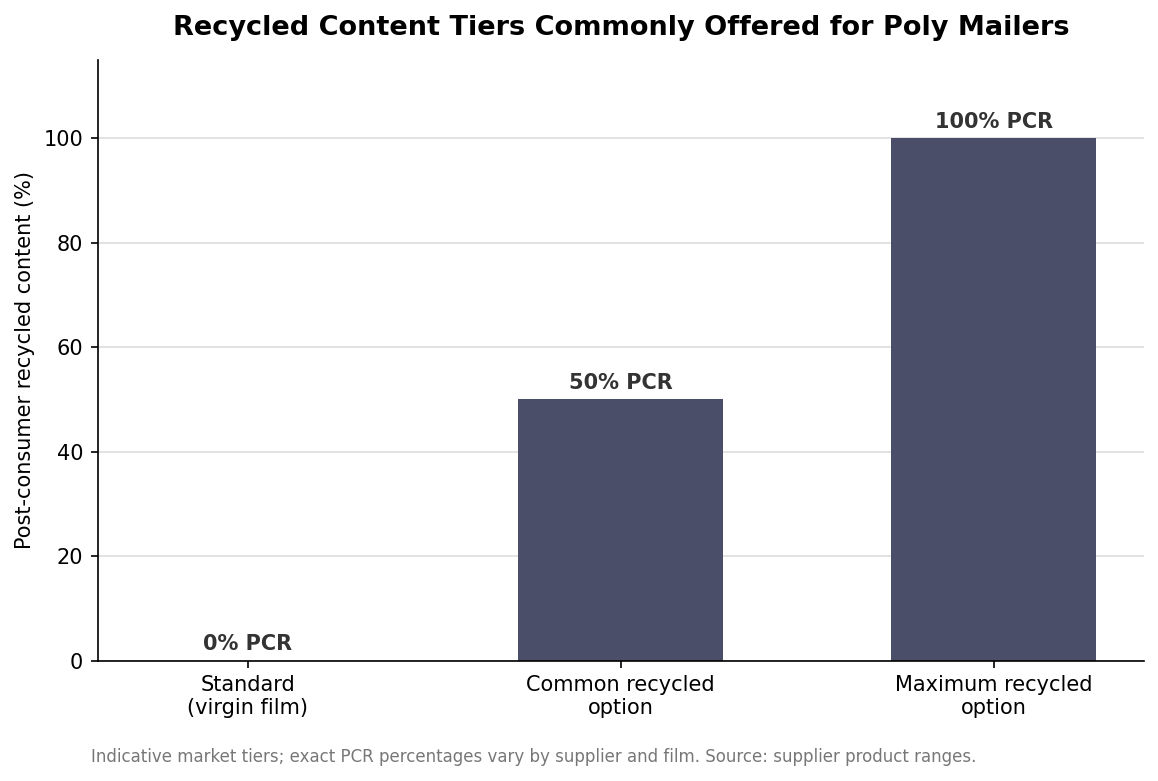
A recycled poly mailer is a conventional polyethylene mailer that swaps some or all of its virgin plastic for post-consumer recycled content, often abbreviated PCR. Suppliers commonly offer tiers, with a widely available option around 50 percent recycled content and premium films reaching 100 percent, though the exact percentage varies by supplier and product and is worth confirming on the spec sheet rather than assuming. Higher recycled content is the meaningful lever here: it reduces the amount of new plastic produced without changing how the mailer performs in shipping, since recycled polyethylene protects a product just as well as virgin film.
The catch is disposal. Thin-film mailers, recycled or not, are usually not accepted in curbside recycling because they jam the sorting machinery at most facilities. The correct path is store drop-off: the same bins at grocery and retail stores that take plastic grocery bags accept clean polyethylene film, which is resin identification code 4. A mailer that carries the “Store Drop-Off” instruction under the How2Recycle label is telling your customer exactly that. If you sell recycled mailers as recyclable, print that drop-off instruction, because a customer who tosses the mailer in their curbside bin in good faith is not actually recycling it.
Compostable mailers: what they are made of and which certifications matter
Compostable mailers are not plastic in the everyday sense. They are typically built from PLA, a polylactic acid derived from corn starch or sugarcane, blended with PBAT, a flexible polymer that gives the film its stretch, and sometimes plant starches from sources like potato or tapioca. Under the heat and microbial activity of a composting environment, these materials break down into water, carbon dioxide, and biomass rather than persisting as microplastics.
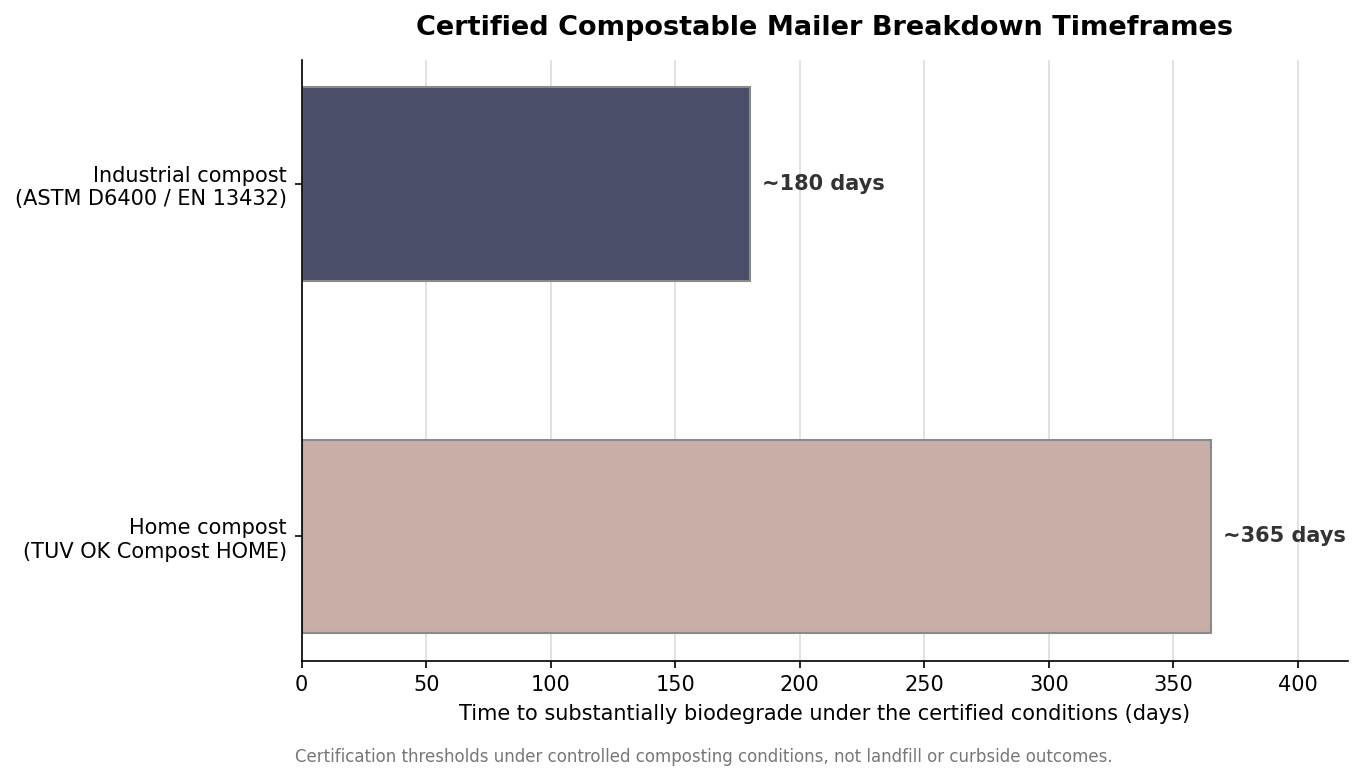
Certifications are what separate a genuine compostable mailer from a vague “biodegradable” claim, which on its own means very little. In the United States, the relevant standard is ASTM D6400, verified by BPI certification; in Europe the equivalent is EN 13432. Both require that a certified product substantially biodegrade, on the order of 90 percent, within about 180 days under industrial composting conditions. Crucially, that means a high-heat municipal composting facility, not a backyard pile. A separate and stricter mark, TÜV OK Compost HOME, certifies that a mailer will break down in a home compost bin at lower temperatures, typically over a longer window of up to a year. If your customers are unlikely to have access to industrial composting, a home-compostable certification is the claim that actually matches their reality.
Trade-offs: shelf life, moisture, cost, and matching the choice to your customer
Compostable films buy their end-of-life benefit with some practical compromises. Because they are engineered to break down, they are more sensitive to heat, humidity, and time than conventional polyethylene, so they have a shorter usable shelf life and can weaken if stored for a long stretch in a hot, damp warehouse. They also tend to be less forgiving of moisture in transit and generally cost more per unit than standard or recycled poly. None of that makes them a bad choice; it makes them a choice that needs matching to your product and storage, especially for items that ship quickly and reach customers who compost.
The honest way to decide is to think about what your customer will actually do with the mailer, not what sounds greenest on a product page. If your audience is urban and recycling-minded but has no composting access, a high recycled-content mailer with a clear store drop-off instruction does more real good than a compostable mailer that ends up in a landfill, where it will not break down the way it does in a compost facility. If your audience genuinely composts, or your city has municipal composting, a certified compostable mailer can be a strong fit. Whichever you choose, print the correct disposal instruction on the mailer, keep the certification marks you are entitled to use and no others, and avoid unqualified words like “eco-friendly” or “biodegradable” that regulators and customers increasingly discount. Matching the claim to the real end-of-life pathway is what turns sustainable packaging from a marketing line into something that actually reduces waste.
Leave a Reply