Every online order has a shadow: the chance it comes back. For most stores that possibility is treated as a problem for the returns team, not the packaging team, which is why the mailer that carried the product out the door usually ends up in the trash the moment the box is opened. A returnable poly mailer changes that calculation. By building a second seal into the same bag, it lets the outbound package become the return package, and for the right catalog that single design choice removes real cost and real friction. The question is whether your catalog is the right one.
How a returnable mailer is actually built
A standard poly mailer has one adhesive strip: peel the liner, fold the flap, ship. A returnable mailer adds two features. First is a tear strip, a perforated opening line the customer pulls to get in without scissors, which keeps the rest of the bag intact. Second is a second adhesive strip positioned below the first. The brand uses the top strip to seal the outbound shipment; if the customer needs to return the item, they reload the bag, peel the second strip, and reseal it for the trip back. No tape, no hunting for a box, no new packaging. These bags are commonly produced in a familiar 2.5 mil gauge, the same everyday thickness used for standard mailers, so the durability tradeoff is minimal.
The mechanical simplicity is the point. Nothing about a returnable mailer requires the customer to understand it in advance; the tear strip and second seal are self-explanatory in the moment, which is exactly when a frustrated returner is least patient.
Start by reading your return rate
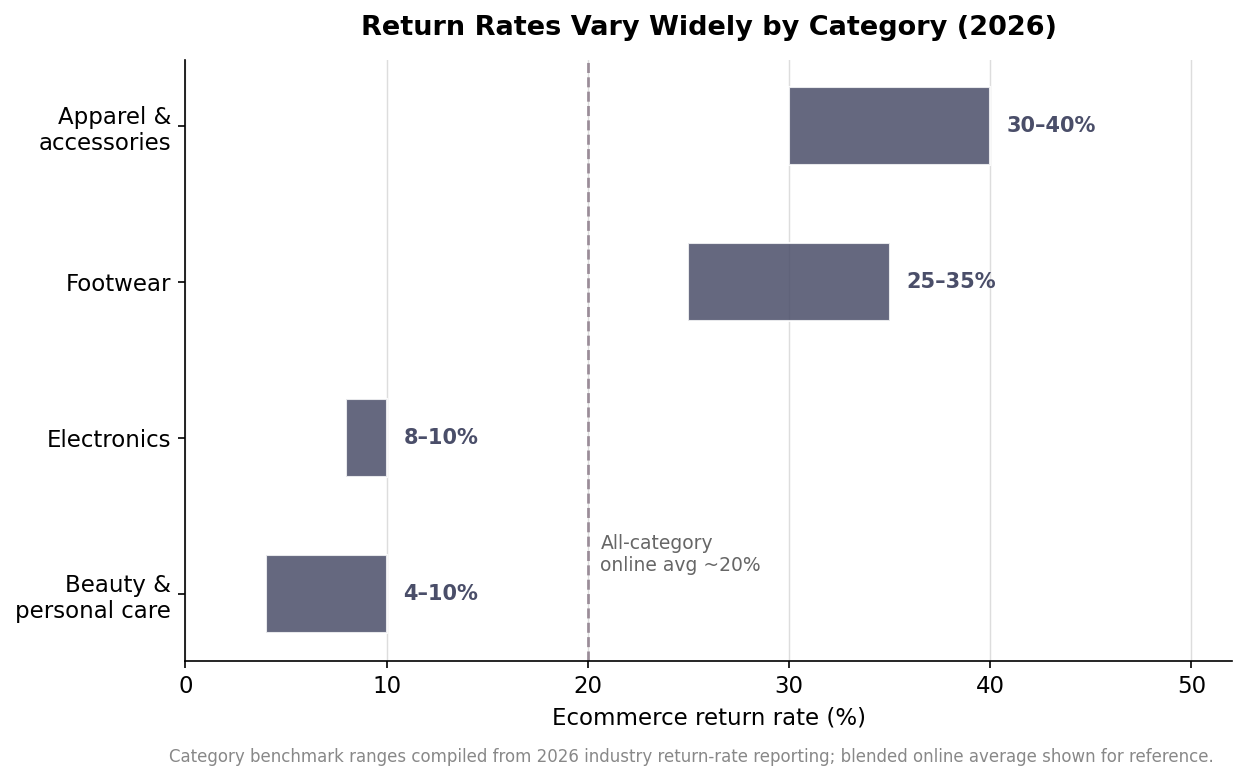
Whether the second strip earns its place depends almost entirely on how often your products come back, and that varies enormously by category. Across all US ecommerce, roughly one in five online orders is returned. But the blended average hides the spread that matters. Apparel and accessories run the highest, commonly 30 to 40 percent, with footwear close behind at 25 to 35 percent, both driven by fit and the well-documented habit of ordering two sizes to keep one. At the other end, electronics sit around 8 to 10 percent and beauty and personal-care items around 4 to 10 percent, partly because many are consumable or not resalable once opened.
Those numbers are the first filter. A fashion brand where a third of shipments reverse is operating in a completely different reality from a supplement brand where almost nothing does, and the packaging should reflect that rather than defaulting to one bag for everything.
When the dual-seal bag pays off
The returnable mailer earns its slightly higher unit cost when two things are true: a meaningful share of orders come back, and the returned item is something you want protected and resalable when it arrives. Apparel, footwear, and accessories check both boxes, which is why reversible packaging shows up most in fashion. For those categories, every avoided return trip is one less box the customer has to source, one less chance the garment gets stuffed into something inadequate, and one less support ticket asking how to send it back.
Where it pays off less is the low-return, low-reverse-logistics end of the catalog. If four to ten percent of your beauty orders come back and most of those are simply refunded rather than physically returned, paying for a second adhesive strip on all one hundred percent of shipments is subsidizing a return that rarely happens. The honest math is per-catalog: multiply your real return rate by the number of shipments, weigh the extra per-unit cost of the returnable bag against what you currently spend enabling returns, from prepaid label packaging to customer-service time, and see whether the reversible design actually clears the bar. For a high-return catalog it usually does; for a consumable one it often does not.
What to specify so the second life works
A returnable mailer only helps if it is sized and printed for both journeys. Size it to the product with enough room that a customer can refold and reseal without fighting the bag; a mailer packed to the edge outbound is miserable to reload. Keep the gauge sensible, since the bag now needs to survive two trips through the mail rather than one. Confirm where the second adhesive strip sits relative to the tear line, because a poorly placed strip leaves too little material to form a clean return seal.
Branding deserves the same double-journey thinking. The exterior print is seen twice, once by your customer and once by whoever handles the return, so the design is doing brand work on the way back as well. Many brands print short return instructions or a “peel here to return” cue directly on the bag or its interior, turning the packaging itself into the returns manual. If you run a reuse or take-back program, the mailer is also the most visible place to say so.
The experience and sustainability angle
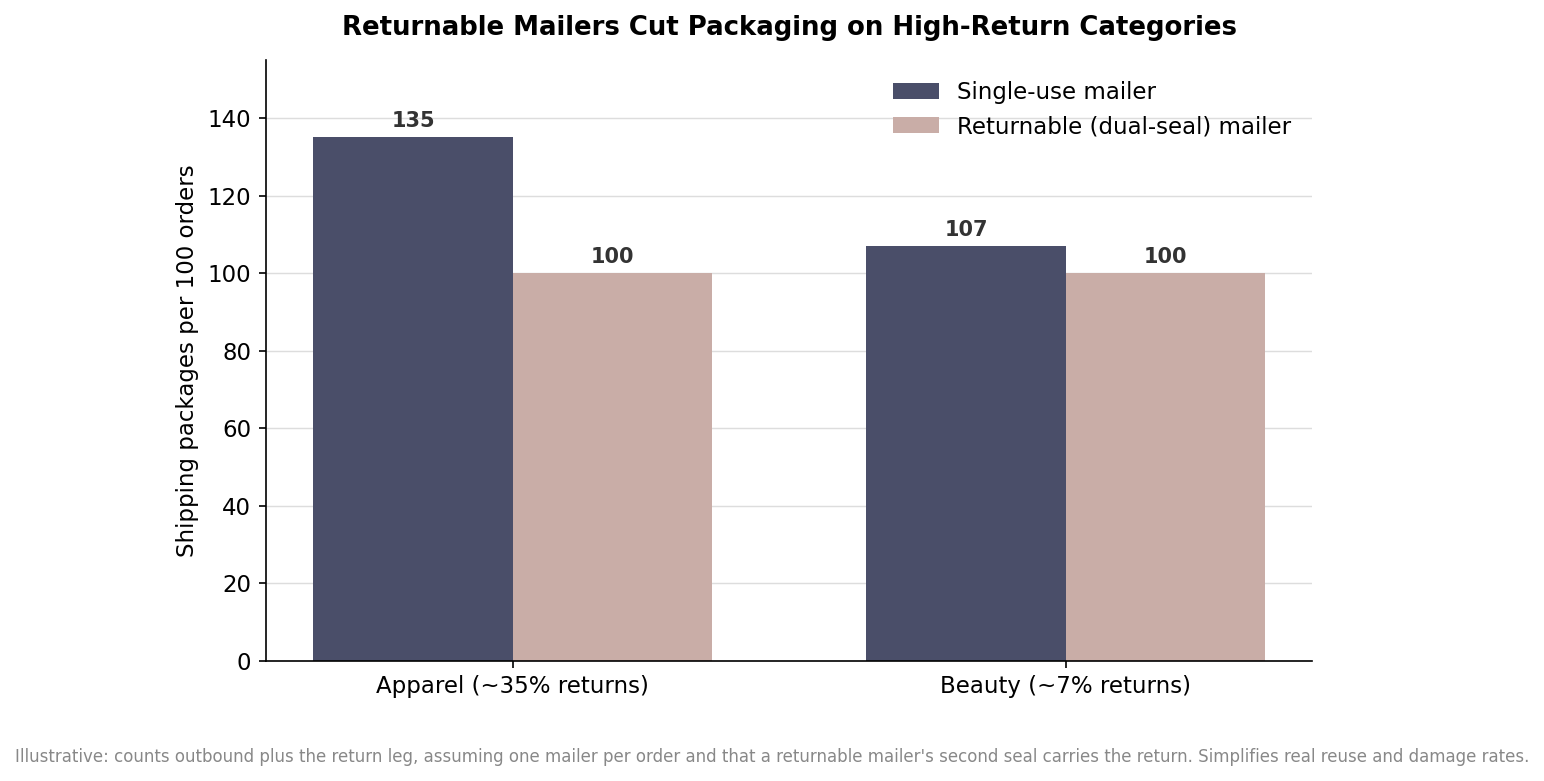
Beyond cost, a returnable mailer removes the single most common complaint about online returns: the logistics of repackaging. A customer who can reseal the original bag in ten seconds is measurably more likely to complete an exchange rather than abandon it, and a smooth return is one of the strongest predictors of whether that shopper buys again. There is a sustainability story too, though it should be told carefully. A bag used for two trips instead of one halves the packaging for any order that comes back, and that is a real reduction, but it applies only to the orders that actually reverse, not the whole run. Claim the benefit you can defend, which is fewer single-use packages on the returns you do receive, and let the honest version do the work.
Returnable mailers are not a universal upgrade. They are a targeted tool that shines on catalogs with high return rates and resalable goods, and adds cost without much payoff on catalogs without them. Know your category’s return rate, run the per-order math, and spec the second seal where it earns its keep.
Leave a Reply